 EN
 Deutsch
 Français
 Italiano
 Español
 Português
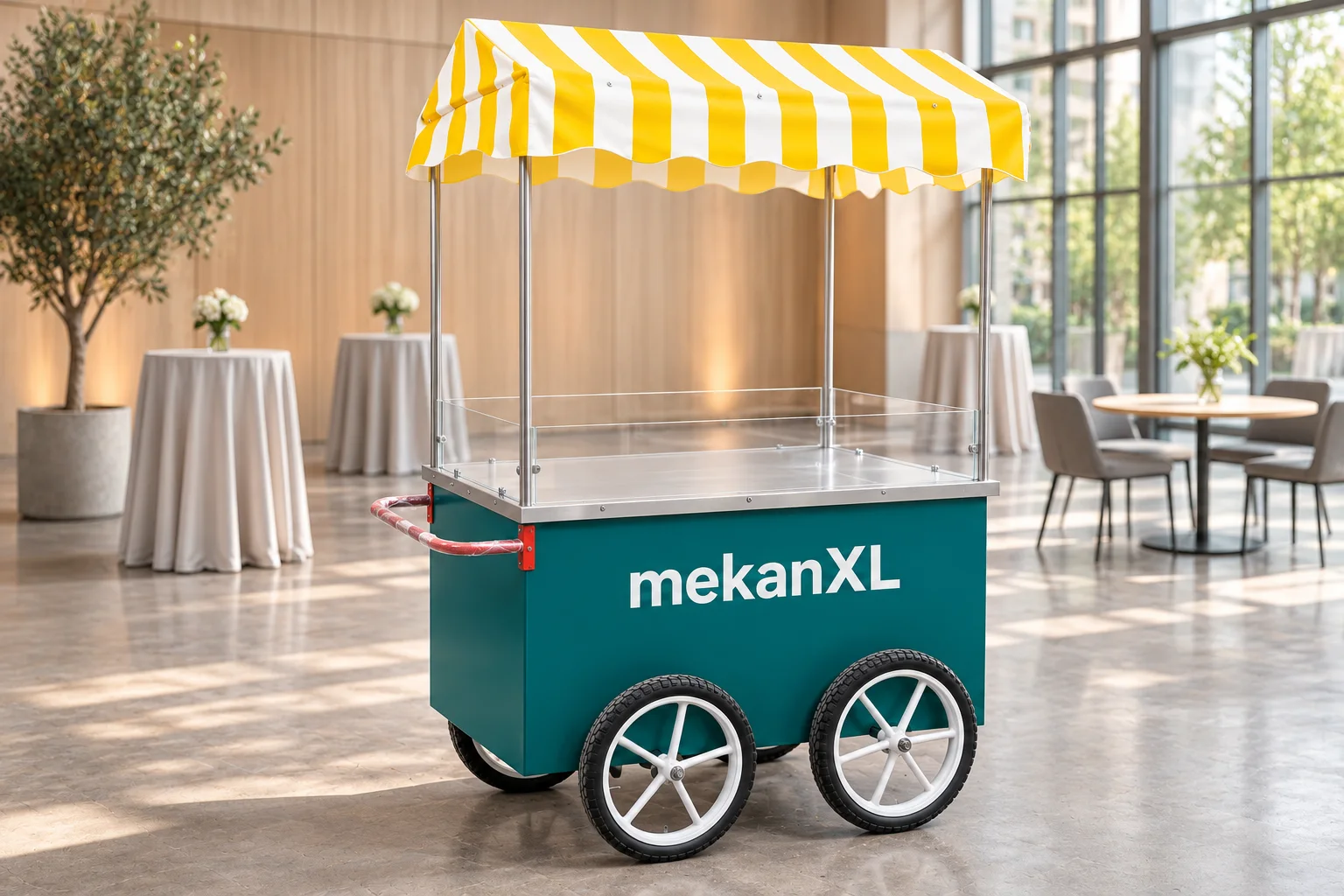
The three options side by side
All three let you sell food or goods outside a shop. They differ in what they cost, what paperwork they need and how easily you can move them.
Vending cart
- Moving
- Pushed by hand
- Paperwork
- No registration
- Kitchen
- One or two light appliances
- Purchase cost
- €429 to €1,209 net
Food trailer
- Moving
- Towed by a car or van
- Paperwork
- Vehicle approval, usually registration
- Kitchen
- Full kitchen possible
- Purchase cost
- Medium to high
Kiosk
- Moving
- Stays in place
- Paperwork
- Building consent
- Kitchen
- Full kitchen possible
- Purchase cost
- High
| Vending cart | Food trailer | Kiosk | |
|---|---|---|---|
| Purchase cost | Low. Ours cost €429 to €1,209 net | Medium to high, depending on the kitchen built in | High: structure, foundation and connections |
| On public roads | No. Pushed by hand | Yes, towed by a car or van | No. Stays in place |
| Vehicle approval and registration | Not needed | Needed | Not applicable; building rules instead |
| Space needed | About a table's footprint | A parking space plus room around it | A permanent plot |
| Moving between sites | In a van, or pushed short distances | Towed | Hardly; usually means rebuilding |
| Setup on site | Minutes: roll in, plug in your appliance | Longer: levelling, connections | None once built |
| Cooking capacity | One or two light appliances | Full kitchen possible | Full kitchen possible |
Vending cart: low cost, quick to start
A vending cart is a counter on wheels. You push it into place by hand, set your own appliance on the worktop and start selling. It has no engine and is not built for road traffic, so it needs no vehicle registration and no number plate. To get it from one site to another you load it into a van or push it a short way.
Our carts come in four sizes, from 50 × 70 cm to 65 × 180 cm, with a fabric canopy, wheels and a worktop with a transparent screen. Your logo is printed on the front at no extra cost. Appliances are not included, so a crêpe plate, coffee machine or freezer is a separate purchase.
Carts work well in places where someone already controls the space: a hotel lobby, a shopping centre, a café terrace, a trade fair stand or a company event. They also suit markets where you rent a pitch and need power from the organiser.
Food trailer: more kitchen, more paperwork
A food trailer gives you a closed room with space for fryers, sinks, fridges and extraction. That is why caterers who cook full meals usually end up with one.
The trade-off is that a trailer is a road vehicle. Before it may be towed on public roads it needs approval, either EU type approval under Regulation (EU) 2018/858 or a national individual approval, and in most countries it also has to be registered and carry a number plate. Depending on its weight and your country, periodic technical inspections can apply as well. Check that your towing vehicle and your driving licence cover the trailer's weight.
On site, a trailer takes up a parking space plus room for queues, and setting it up takes longer than rolling a cart into place.
Kiosk: a fixed place to sell
A kiosk is a small permanent building or cabin. It usually needs planning or building consent, a long-term lease for the plot and its own connections for power and often water. In return you get a weatherproof shop that is always ready to open.
A kiosk only pays off if the location is proven. Many businesses test a spot with a cart first and decide on a kiosk later.
Permits: what applies to all three
Whichever format you choose, selling on public ground needs permission from the city or municipality. Rules, waiting times and fees differ from city to city and from country to country, so we cannot give you a figure. Ask the local authority before you buy anything.
If you sell food, you will generally have to register your food business with the local food authority and meet its hygiene rules. Some authorities require a hand-wash basin with running water at the stand. Clarify this early, because it affects which format and which size you need.
On private ground, such as a hotel, a shopping centre or an event site, you need the agreement of the owner or organiser. They will also tell you where power is available and what safety rules apply.
When a vending cart is the wrong choice
A cart from our range is probably not right for you if:
- you cook full meals with fryers, several hot plates or extraction;
- you want to drive from town to town with everything built in and ready to go;
- your local rules demand running water or a sink at the stand and you have no other way to provide it;
- your appliance needs mains power and the site has none;
- you expect long queues all day and need two or three people working at once.
In those cases, look at a trailer or a kiosk. If you are unsure, send us a short description of what you sell and where. We will tell you honestly whether a cart can do the job.
Quick checklist before you decide
- Where will you sell: public ground, private ground or both?
- What appliances do you need, and how much power do they draw?
- How often will you move, and how far?
- What does the local authority require for permits and hygiene?
- What budget do you have for the unit itself, before stock and equipment?